The vacuum inlet remains one of the least understood pieces of equipment in a swimming pool. Sealed into the wall of the basin, it serves as a dedicated suction point for cleaning the bottom and walls, complementing the skimmers that only work on the surface. Knowing how to use it correctly changes the quality of the cleaning, the duration of the operation, and the load imposed on the filter.
Vacuum Inlet and Skimmer: Two Suction Circuits with Distinct Functions
The skimmer captures floating debris (leaves, insects, dust) thanks to surface tension. The vacuum inlet, on the other hand, is positioned lower on the wall, usually at mid-height or at the bottom, to suck up heavy deposits that coat the basin. Confusing the two leads to underutilizing the hydraulic circuit.
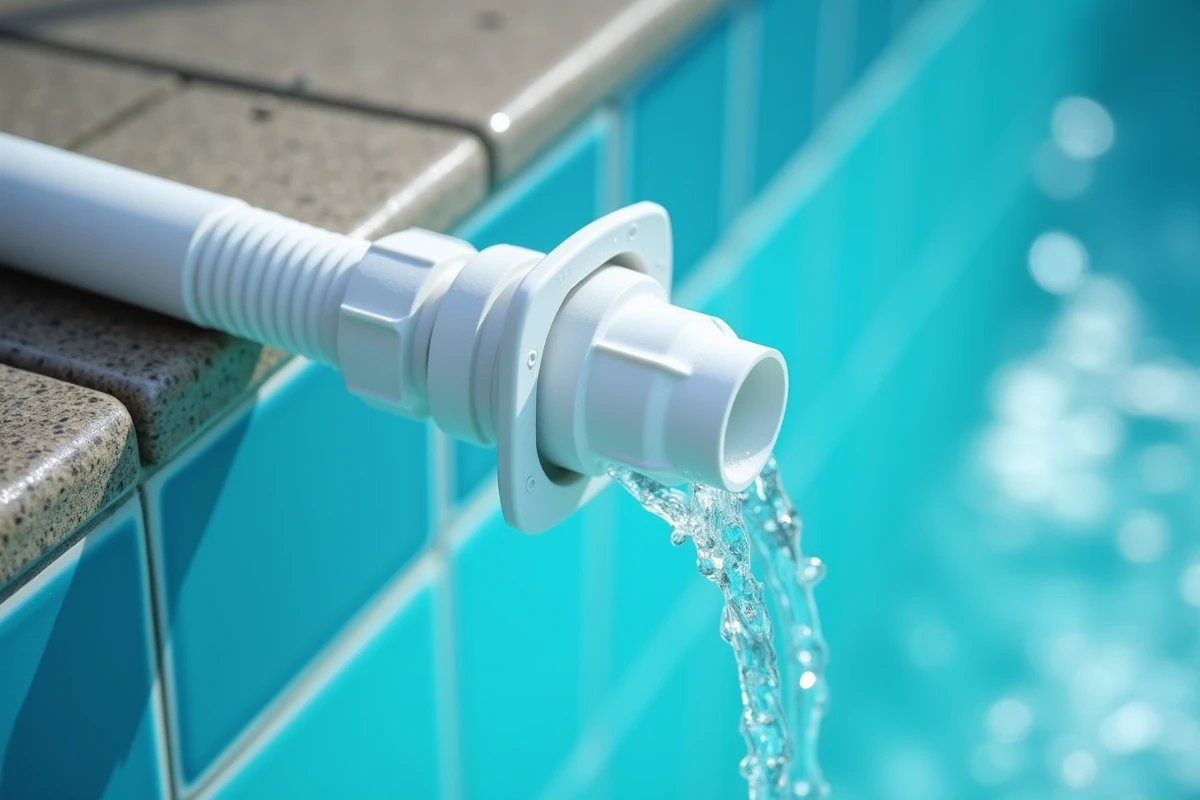
This distribution of functions allows for adjusting the cleaning strategy according to the type of dirt. For algae deposited on the bottom, fine sand, or limestone, the skimmer alone is not sufficient. The vacuum inlet connects the hose of the manual vacuum (or a hydraulic robot) directly to the pump’s suction circuit, bypassing the skimmer’s basket.
To use the pool vacuum inlet effectively, one must understand how to direct the water flow to this sole entry by closing off other suction sources. Without this manipulation, the suction power is distributed between the skimmer, bottom drain, and vacuum inlet, which reduces the force available at the end of the hose.
Valve Adjustment: Concentrating Suction on the Vacuum Inlet
The technical room contains several valves corresponding to the different sealed parts of the basin. Before connecting the vacuum, one must close the skimmer valve and the bottom drain valve so that all the pump’s power feeds only the vacuum inlet.
The multiport valve (six-way in most installations) remains in the “filtration” position for standard cleaning. The water sucked in by the vacuum then passes through the sand or cartridge filter before returning to the basin via the return jets.
When to Switch to “Drain” Position
If the basin contains a visible amount of green algae or significant deposits, the “drain” position sends the dirty water directly to the drainage, bypassing the filter. This option prevents clogging of the filter media, but it lowers the water level. One should plan for a water top-up during or after the operation.
Some guidelines for choosing the right position:
- Slightly cloudy water with fine deposits on the bottom: filtration position, the filter absorbs the load without issue.
- Bottom covered with algae or sludge after a storm: drain position to evacuate the polluting mass without overloading the filter.
- After winterizing, if the bottom shows a carpet of organic debris: drain position first, then filtration for finishing cleaning.
Hose Purging and Manual Vacuuming Technique
Connecting the hose to the vacuum inlet without purging it sends air into the pump circuit. The result: the pump loses prime, suction drops, and everything must be restarted. The hose must be completely filled with water before connection.
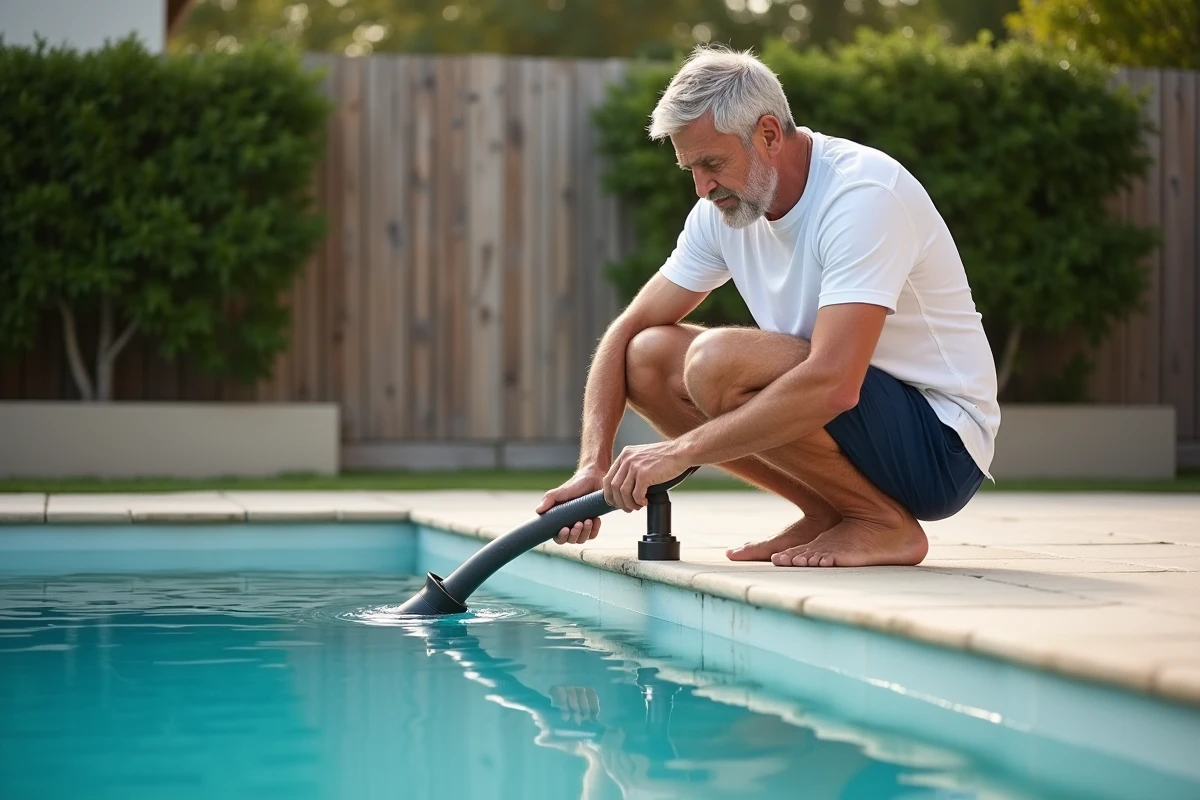
The most reliable method involves submerging the hose section by section starting from the vacuum head, already attached to the telescopic pole and resting on the bottom of the basin. Each segment is pushed underwater until air escapes from the other end. Once the hose is full, the free end is pressed against a return jet to maintain pressure, then quickly connected to the vacuum inlet.
Actions During Cleaning of the Bottom and Walls
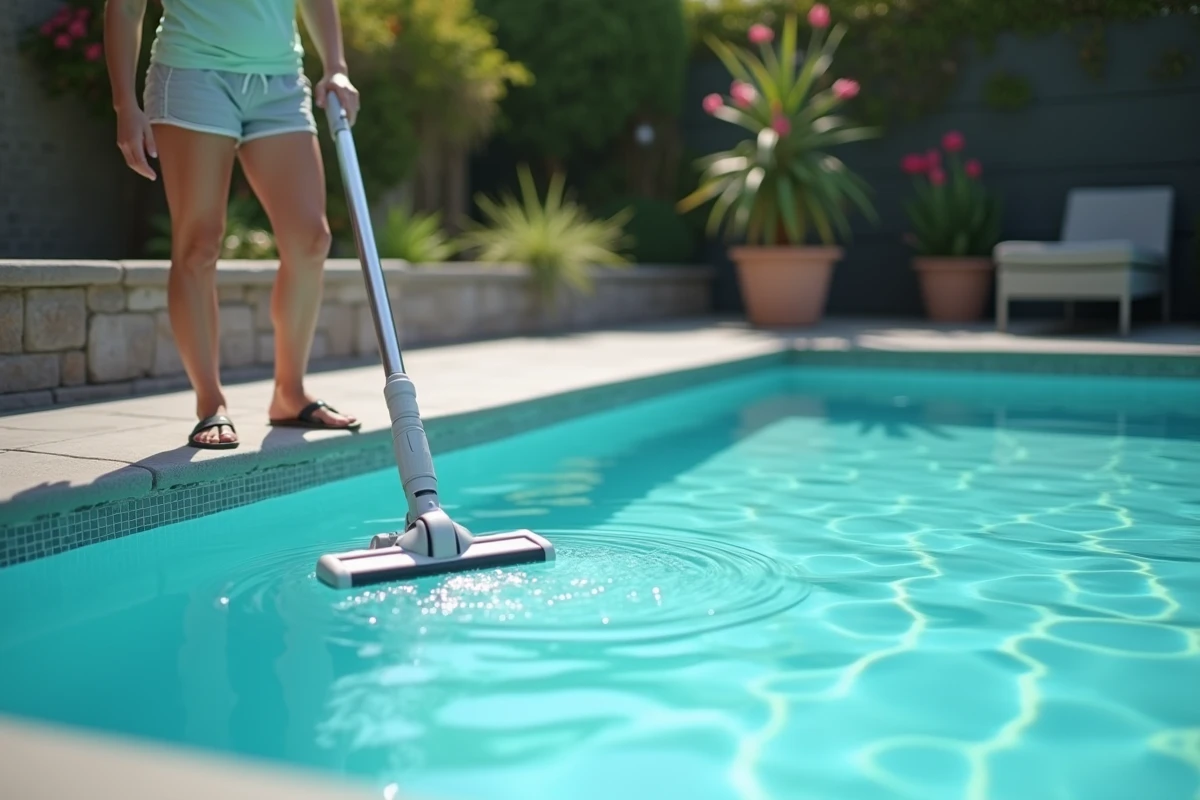
The temptation is to scrub quickly to “dislodge” dirt. This is counterproductive. Rapid movements resuspend particles in the water, and the vacuum passes over without capturing anything. Slow, straight passes, in parallel bands, keep debris in contact with the bottom where suction captures them.
Each band should slightly overlap the previous one, like a lawn mower pass. Corners and stairs deserve special attention: the vacuum head does not always make good contact in these areas. An articulated or triangular head model improves contact on irregular surfaces.
Vacuum Inlet and Hydraulic Robot: A Usage in Full Evolution
The vacuum inlet is no longer reserved for just the manual vacuum. Hydraulic robots, powered by the pressure of the filtration circuit, connect directly to this same inlet. The robot then moves autonomously, propelled by the water flow, without electrical power.
This trend positions the vacuum inlet as a versatile connection interface for vacuums and hydraulic robots. For owners who do not wish to invest in an electric robot, the hydraulic robot connected to the vacuum inlet represents a lower-cost alternative. Field feedback varies on this point: effectiveness depends greatly on the pump’s power and the diameter of the pipes, parameters rarely mentioned in connection guides.
Recent pools generally integrate the vacuum inlet at a depth and location optimized for this dual use. In older pools, the initial placement may limit the coverage of the hydraulic robot, which struggles to climb the walls if the inlet is poorly positioned.
Maintenance of the Vacuum Inlet and Suction Circuit
A clogged vacuum inlet reduces flow without the owner realizing it immediately. The O-ring of the inlet must remain flexible to ensure the seal of the connection. A dry or cracked seal causes air to enter, which reduces suction.
- Check the O-ring at the beginning and end of each season, replacing it as soon as it shows cracks.
- Remove the cap from the vacuum inlet after each use and inspect the inside for any trapped debris.
- Clean the pump’s pre-filter after each vacuum session: the debris sucked in accumulates there and reduces the performance of the circuit.
When the vacuum inlet is not in use, its threaded cap must remain in place. An absent cap creates a parasitic suction point that disrupts the flow between the skimmer and bottom drain, affecting the quality of current filtration.
Cleaning through the vacuum inlet, whether manual or via a hydraulic robot, remains the most direct way to eliminate what filtration alone does not capture. Effectiveness relies less on the equipment than on the correct adjustment of the valves and the purging of the hose, two simple actions often overlooked.