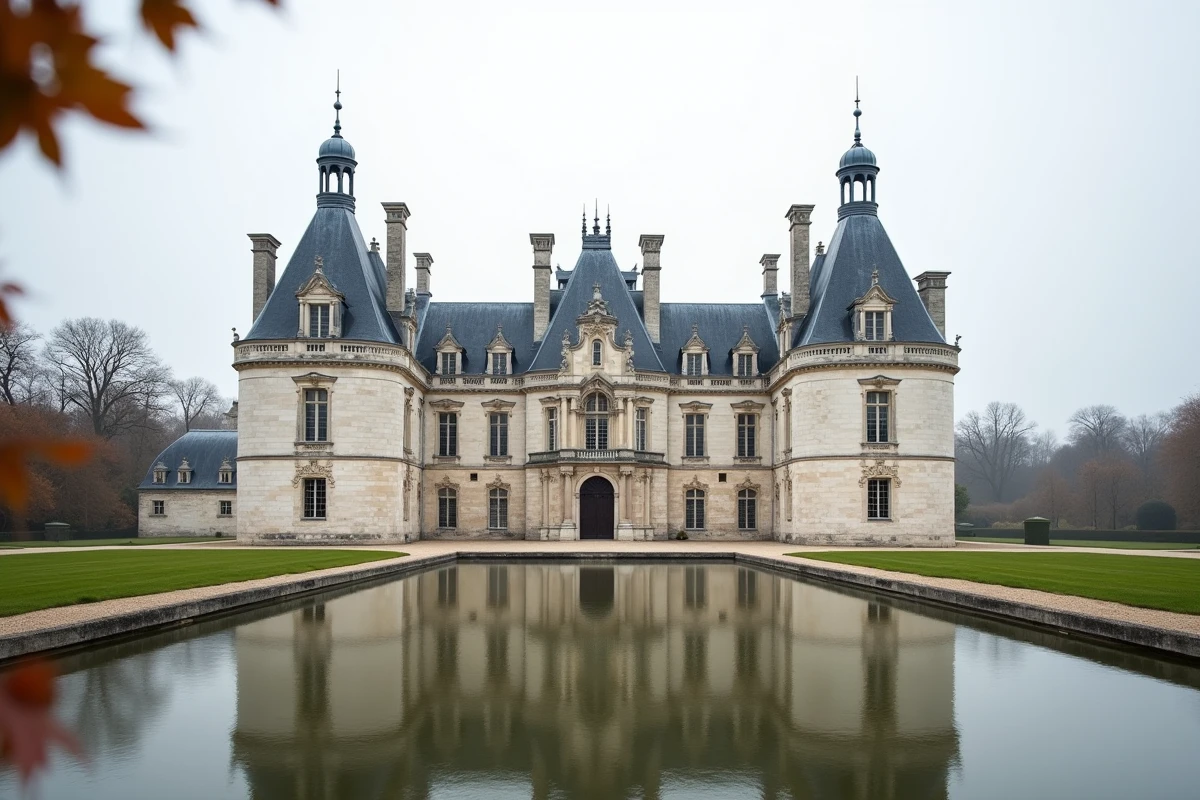
The Château de Chambord has been owned by the French state since 1930. It will never be put up for sale, and no notary will ever sign a deed of transfer for this monument. Asking about its market value is akin to constructing a purely theoretical estimate based on data that was not designed for this type of property.
The national estate of Chambord comprises approximately 14,000 m² of living space, 440 rooms, and 282 fireplaces, all set within a walled park of 5,440 hectares surrounded by 32 km of walls. Classified as a Historical Monument since 1840 and listed as a UNESCO World Heritage site under the Loire Valley, the château escapes any standard real estate comparison grid.
Local land as a starting point for estimating the Château de Chambord
To attempt to provide a rough estimate, the most direct approach is to look at the price per square meter in the commune of Chambord (41250) itself. According to MeilleursAgents, as of January 1, 2026, the average price per m² in Chambord is around 1,900 euros, with a range from 1,100 to 2,800 euros depending on the addresses.
Applying this average price to the 14,000 m² of living space in the château would yield an amount of around 26 million euros. A figure that clearly does not reflect the true heritage value of the monument. This rural commune in Loir-et-Cher shows prices consistent with central France, far from the levels in Paris or the Côte d’Azur.
This exercise has the merit of establishing a theoretical floor, but it mainly highlights the limitations of a local comparative approach. Anyone seeking an estimate of the price of the Château de Chambord encounters the same problem: no comparable exists on the market.
Theoretical range: between 800 million and 5 billion euros
The Bon Cap website, which enjoys estimating heritage properties off the market, proposes a range of 800 million to 5 billion euros for Chambord. The gap between the low and high end of this estimate (a factor of six) illustrates the impossibility of converging on a reliable price.
Several variables inflate the valuation compared to simple land value:
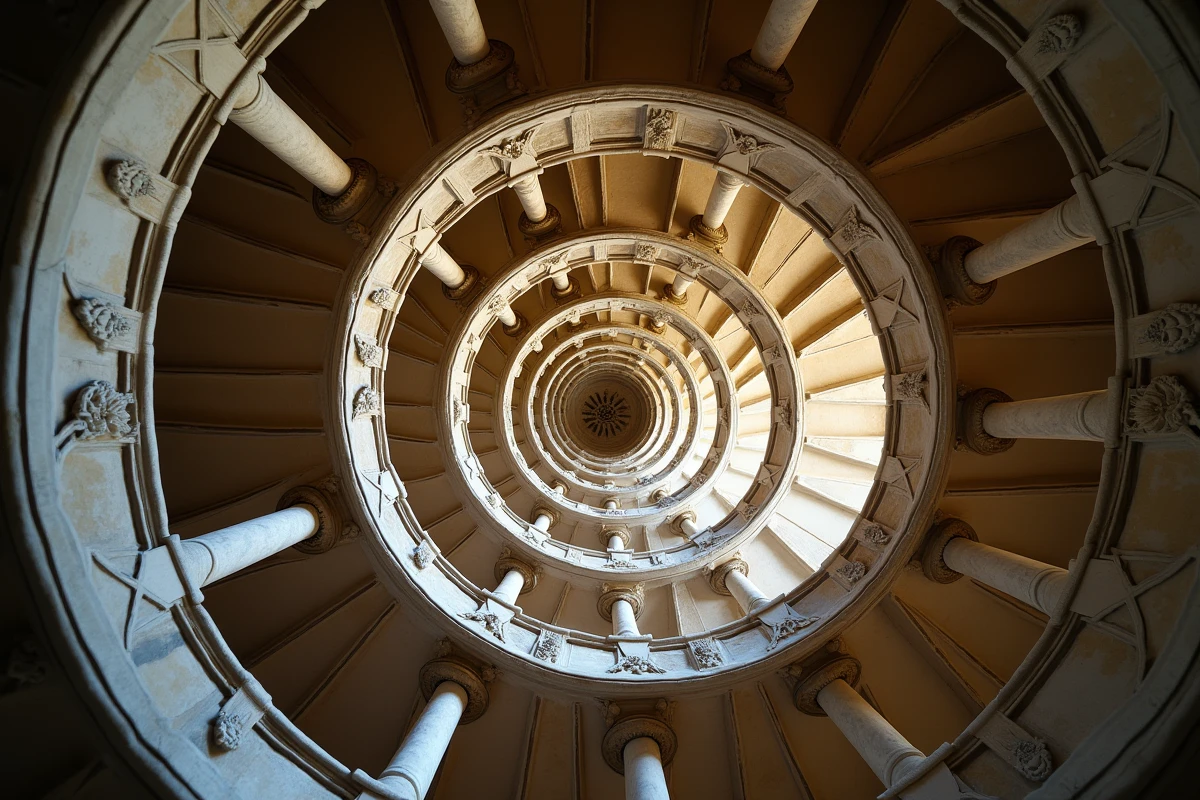
- The historical dimension: the château was commissioned by François I in 1519, and the double revolution staircase is attributed to Leonardo da Vinci. This type of provenance has no market price.
- The enclosed estate of 5,440 hectares constitutes the largest enclosed forest park in Europe, with considerable ecological and hunting value.
- Tourist attendance reaches about 1 million visitors per year, generating recurring revenue (ticket sales, events, space rentals).
However, this high range does not take into account a parameter that would mechanically reduce the net value for a potential buyer: the cost of restoration.
Restoration cost: the hidden liability of a Renaissance château
A château of this magnitude is not owned; it is maintained. And the maintenance of Chambord requires budgets that few private fortunes could sustainably absorb.
Several recent public sources mention a need of around 37 million euros to restore just the François I wing. This project, presented as a conservation challenge, covers only a fraction of the building. A partnership project discussed in the public debate involved 100 million euros of work spread over ten years for the overall renovation of the monument.
These amounts weigh heavily in any estimation attempt. A hypothetical buyer would not only have to finance the purchase but also set aside tens of millions of euros per decade just for the conservation of the structural work. The constraints related to the Historical Monument classification impose specific materials, techniques, and artisans, which increases every line item of expenditure.

Heritage value versus market value: why the price of Chambord remains a fiction
The question of the value of the Château de Chambord encounters a distinction that the traditional real estate market does not address: the difference between a transferable property and a non-commercial property.
Chambord is owned by the state and managed by a public establishment. Its sale would require an unprecedented political decision, a legislative vote, and likely a process involving UNESCO. The available data does not allow for projecting a realistic transfer scenario.
In the market for classified châteaux in France, transactions involve properties whose size and estate are incomparable. An “ordinary” Loire château (a few thousand square meters, a park of a few dozen hectares) sells for between a few million and around twenty million euros. Chambord is several orders of magnitude above that, with no past sale serving as a reference.
What the estimation ranges really reflect
The figures put forward (800 million to 5 billion) measure less a price than a prestige. They aggregate the gross land value, capitalized tourist flows, the absolute rarity of the property, and its symbolic burden. Each of these components rests on questionable assumptions.
The capitalization of tourist revenues, for example, depends on the rate of return used. A conservative rate inflates the valuation, while an aggressive rate reduces it by half. Field returns vary on this point depending on whether one adopts a heritage logic or an investment logic.
The Château de Chambord is worth what a buyer would be willing to pay, and that buyer does not exist. The estimation remains an intellectual exercise, not a market data. The wide range between 800 million and several billion euros provides a useful scale to measure the extent of national heritage, but it corresponds to no conceivable transaction. The true price of Chambord is what France pays each year to preserve it.