
Renovating a property involves coordinating different trades, adhering to a regulatory framework that evolves each year, and managing a budget subject to technical uncertainties. Successfully completing renovation and layout work relies less on a list of good intentions and more on a precise sequencing method, tailored to the nature of the building and the current administrative constraints.
Order of renovation work: the technical sequence that avoids rework
The primary cause of cost overruns on a renovation site is poor sequencing of interventions. Having to redo a partition because the plumber didn’t come before the drywall installer, or repainting after the installation of an electrical circuit, incurs expenses that could have been avoided.
The structural work and waterproofing always come before interior layout. Roof, framework, foundations: these elements determine the durability of everything that follows. Addressing the kitchen or bathroom before resolving a structural humidity issue is akin to decorating a boat that is taking on water.
After the structural work, the logic follows a descending order: wall insulation, then networks (electricity, plumbing, ventilation), then partitioning, then flooring, and finally finishes. Each phase depends on the previous one. Several resources detail this progression by type of project, notably the work on the Monsieur Bricoleur site which categorizes interventions.

EPC and energy renovation: why the diagnosis conditions the project
Since the reform of the energy performance diagnosis, the classification of a property directly influences the work to be undertaken. A property classified F or G faces increasingly stringent rental restrictions. The EPC is no longer just an administrative document: it guides the sequencing of the project and budget priorities.
In practical terms, a poor classification pushes for insulation to be addressed before any aesthetic improvements. Walls, roofs, and windows represent the most effective areas for improving overall performance. Renovating a bathroom or redesigning living spaces without correcting thermal losses means losing part of the comfort gained.
Prioritize the building envelope
Insulating attics and exterior walls yields the most significant energy gain in most configurations. Ventilation follows: a well-insulated property but poorly ventilated accumulates humidity, which degrades materials and indoor air quality.
This envelope-focused approach aligns with the logic of MaPrimeRénov’, which is shifting from 2024-2025 towards large-scale renovation pathways rather than grants paid out item by item. A renovation advisor now intervenes on complex projects to validate the technical coherence of the work program.
Home renovation budget: anticipating invisible costs
Most budget overruns do not stem from more expensive tiles than expected. They arise from items that the initial quote did not cover, as they only become apparent once the site is opened.
- Concealed networks (electricity, plumbing) often reveal non-compliance once the partitions are opened, requiring a whole circuit to be redone instead of just a simple connection
- Old floors may require leveling or structural reinforcement before the new covering is laid, a cost rarely anticipated in preliminary estimates
- Drainage in kitchens and bathrooms may sometimes require changes in slope or diameter to comply with current standards, directly impacting the schedule
Allowing for a margin of at least ten percent of the total budget for these technical unforeseen events remains a precaution consistent with the reality of renovation projects.
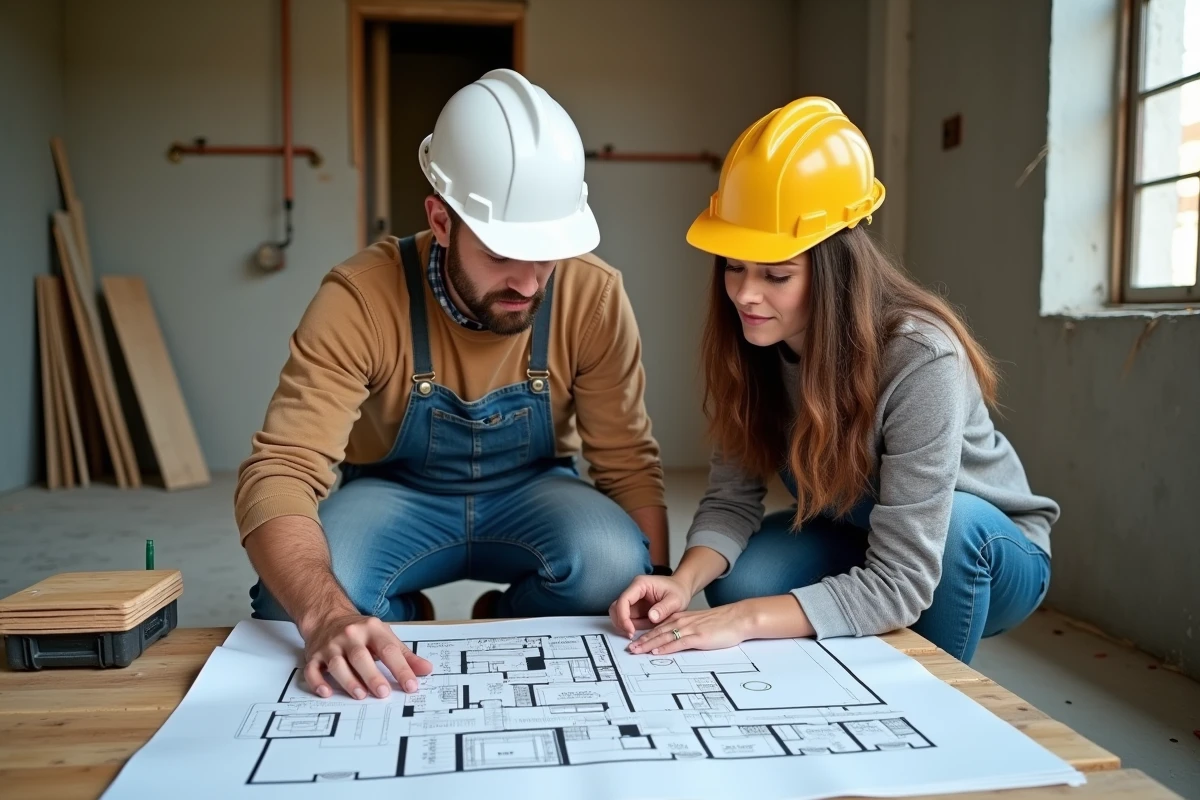
Compare quotes based on the same description
Requesting multiple quotes is only valuable if the technical description is identical from one craftsman to another. A cheaper quote that omits the removal of the existing elements or does not specify the quality of materials skews the comparison. Each line must mention the product reference, the area or measurement concerned, and the warranty conditions.
Pressure on the construction trades: a planning parameter
The lack of skilled labor in construction is not a new phenomenon, but it directly affects the duration and cost of projects. Intervention times for certain trades (drywall installers, electricians, plumbers-heating engineers) can reach several months depending on the region.
This reality necessitates starting the search for craftsmen well before the desired start of the project. Waiting until the plans are finalized to contact professionals mechanically delays the project by several weeks, sometimes an entire quarter.
- Contacting craftsmen as early as the design phase, even if the project is not yet finalized in detail
- Checking qualifications (RGE mention for energy performance-related work, up-to-date ten-year insurance)
- Confirming in writing the start dates and expected duration of each phase, to avoid poorly managed overlaps between participants
Coordination between phases remains the most delicate point. On an interior renovation project affecting the kitchen, bathroom, and living spaces, the slightest delay from one participant creates a domino effect on the others.
A well-managed renovation project relies on an honest initial diagnosis, a rigorous order of interventions, and a realistic financial margin. The final comfort depends as much on the quality of materials as on the rigor of the schedule.