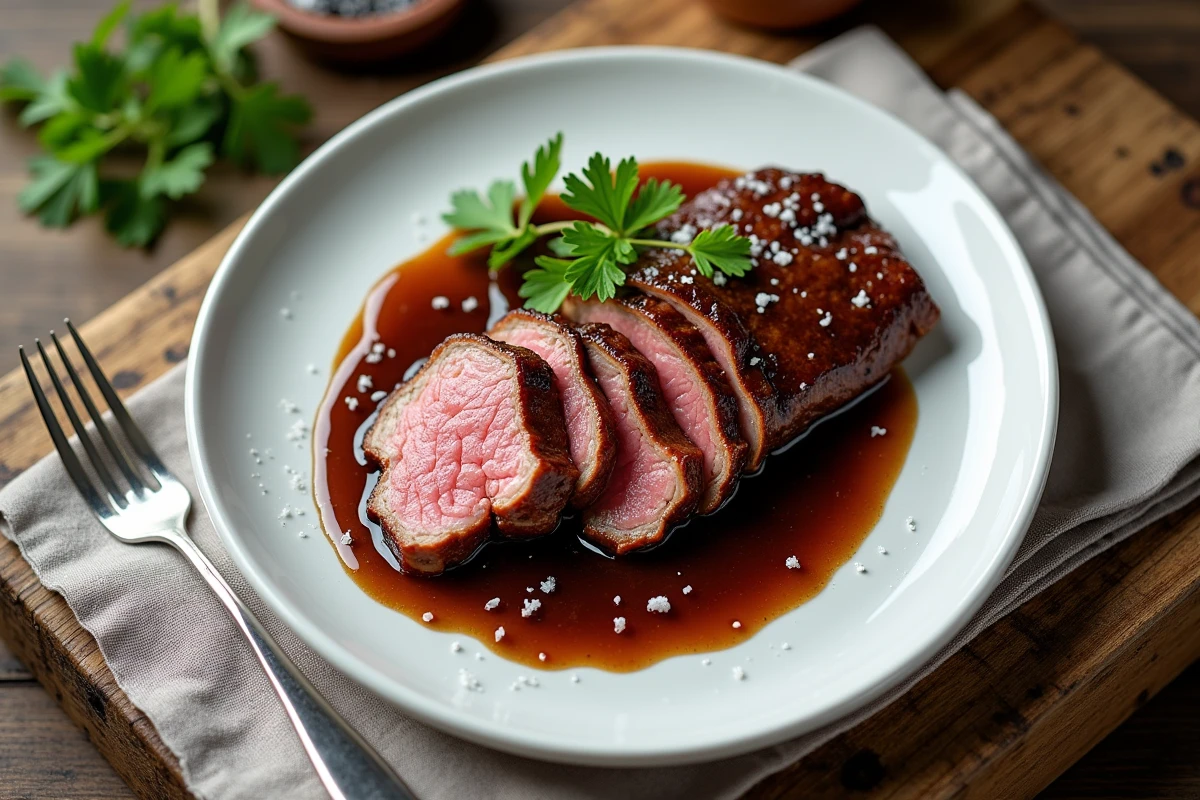
Beef tongue is one of those cuts that many buy without knowing how to prepare it properly. Between soaking, peeling, and choosing the cooking method, each step affects the final result. The term “beef chat tongue” refers to a fine cut of the tongue, often pan-fried or seared, which has been gaining ground in home kitchens for a few years now.
Low-temperature cooking of beef tongue: an unknown alternative
Classic recipes prescribe cooking in a pot or in a court-bouillon for several hours. This approach works, but it leaves little room for error: just a few extra minutes and the meat dries out.
Recent culinary tests document another way: vacuum cooking at around 75-80 °C for 8 to 12 hours. The principle relies on a slow temperature rise that denatures the collagen without expelling the juices. The result yields a more homogeneous texture throughout the thickness of the tongue, where the pot sometimes produces a firmer core than the edges.
This method has a practical advantage that is often underestimated: cooking can be started the night before. In the morning, the tongue is ready; all that remains is to peel and slice it. For those who want to delve into cutting and finishing techniques, a beef chat tongue recipe on EpicBuzz details the skills to master in order to achieve thin and even slices.
However, vacuum cooking requires equipment (immersion circulator, suitable bags) that not everyone has. For a first attempt, the pot remains perfectly valid, provided you monitor the cooking and test the tenderness with the tip of a knife.
Peeling and degreasing the tongue: the step that changes the dish
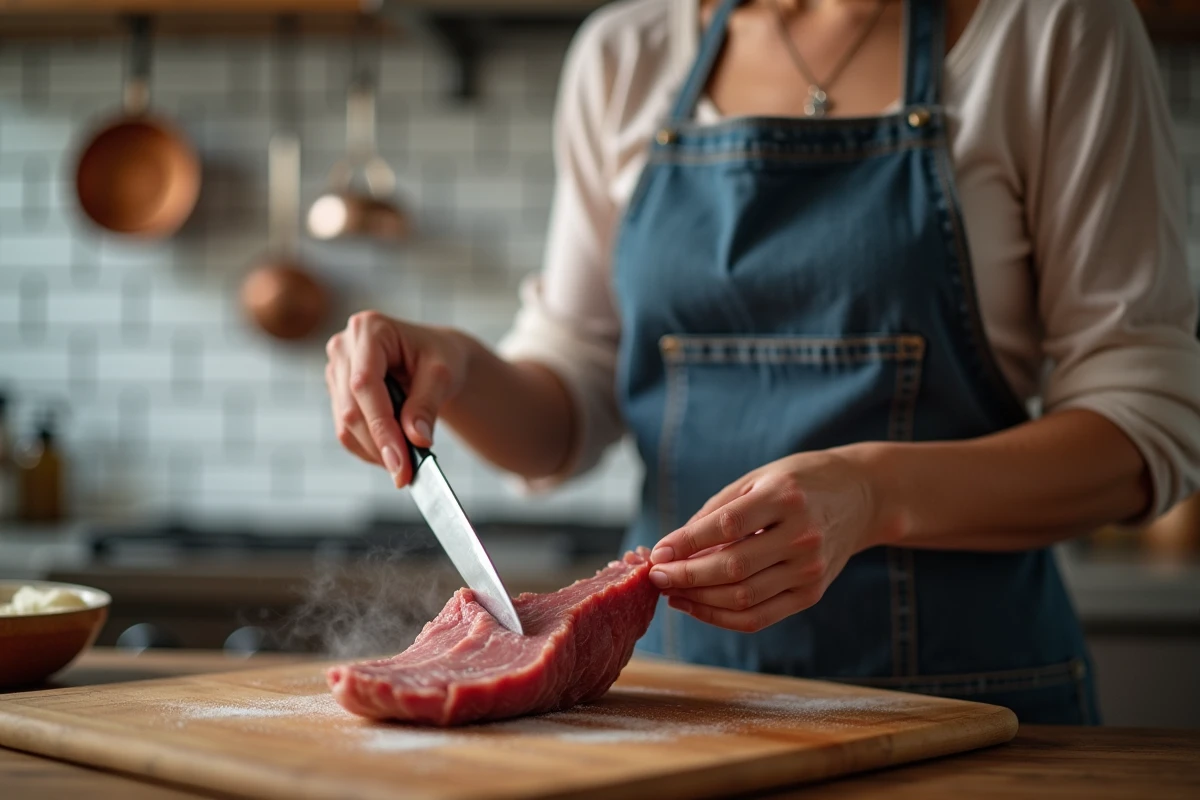
Most recipe cards mention peeling in one line, as a formality. Yet, it is the step that determines the taste and nutritional quality of the dish.
Why peel while hot
The skin of the tongue comes off easily when the meat is still hot. As it cools, it adheres again, making the operation laborious. Remove the tongue from the broth, rinse it briefly under cold water just to handle it, then pull the skin from the tip to the base.
Several nutritionists remind us that beef tongue is rich in saturated fats concentrated under the skin. Careful peeling, combined with degreasing the cooking broth, significantly reduces the lipid intake of the dish. This point is almost absent from mainstream recipes.
Degreasing the broth
After cooking, let the broth cool in the refrigerator. The fat solidifies on the surface and can be removed in one motion with a spoon. This degreased broth then serves as a base for the sauce (tomato, pickles, mustard) with a concentrated flavor and a clearer texture.
- Remove the skin while the tongue is hot, starting from the tip
- Eliminate visible small fatty lumps at the base of the tongue with a knife
- Refrigerate the broth for several hours to solidify the fat before preparing the sauce
Snacked beef chat tongue: the bistronomy finish
The term “chat tongue” applied to beef refers to thin slices cut from the cooked and peeled tongue, then seared over high heat in a pan or on a griddle. This technique, borrowed from bistronomic cuisine, transforms a dish perceived as rustic into a contemporary plate.
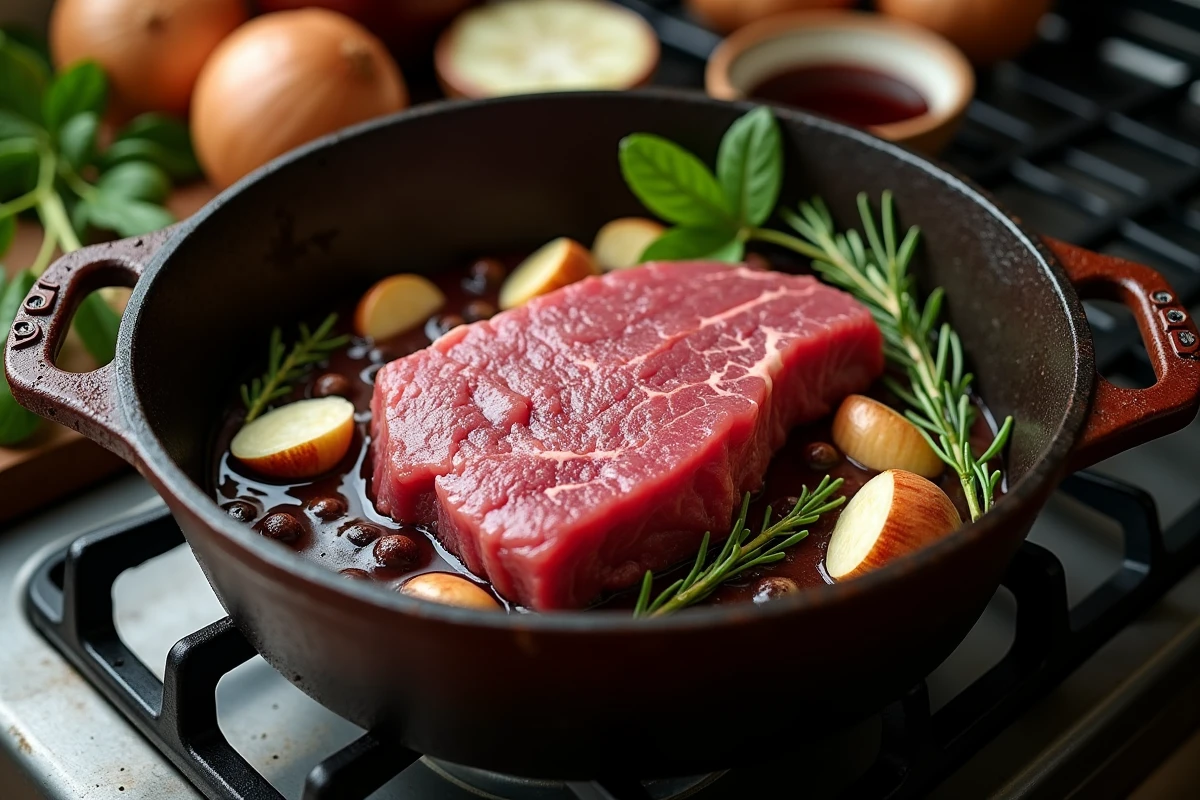
The cutting is done cold, into slices a few millimeters thick, ideally with a fine, sharp knife. The cooled tongue holds better under the blade and allows for even slices. A two-minute sear on each side in a very hot pan, with a drizzle of neutral oil, is enough to create a golden crust while keeping a melting heart.
The accompaniments that work best with this preparation play on contrast:
- An acidic condiment (pickles, capers, ravigote sauce) to cut through the residual fat
- A neutral starch (mashed potatoes, creamy polenta) that absorbs the juices
- A bitter salad (frisée, endive, arugula) for balance in the mouth
- A spicy tomato sauce or a grainy mustard served on the side
Beef tongue and nutritional profile: a unique cut among offals
Beef tongue belongs to the offal family, and its nutritional profile clearly distinguishes it from noble cuts. The tongue is among the offals richest in vitamin B12 and zinc, two micronutrients often deficient in diets low in animal products.
This nutritional status partly explains the renewed interest observed among consumers sensitive to anti-waste cooking. Using the entire animal, including so-called “second-choice” cuts, aligns with a food logic that goes beyond just taste.
The available data do not allow for setting an ideal consumption threshold. The saturated fat content remains a point of vigilance, which careful peeling and degreasing of the broth can help mitigate without completely eliminating. For a balanced meal, pairing the tongue with green vegetables and limiting the portion to a thick slice per diner constitutes a reasonable guideline.
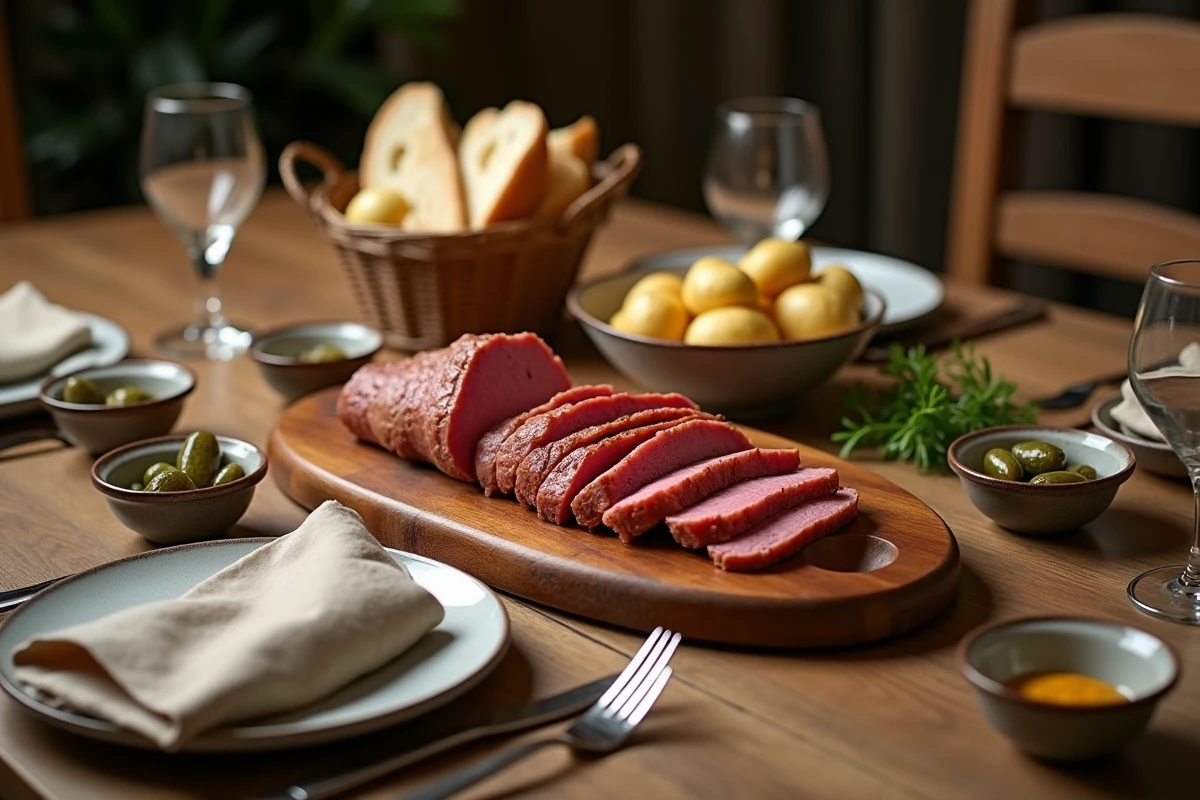
The return of beef tongue to home kitchens is due as much to the evolution of food mentalities as to the rediscovery of simple techniques. Well-peeled, properly degreased, and cooked with care, this cut of meat offers a quality-price ratio that few other cuts can compete with. Expect between two to four hours of cooking depending on the chosen method, but most of the work is done without intervention.